

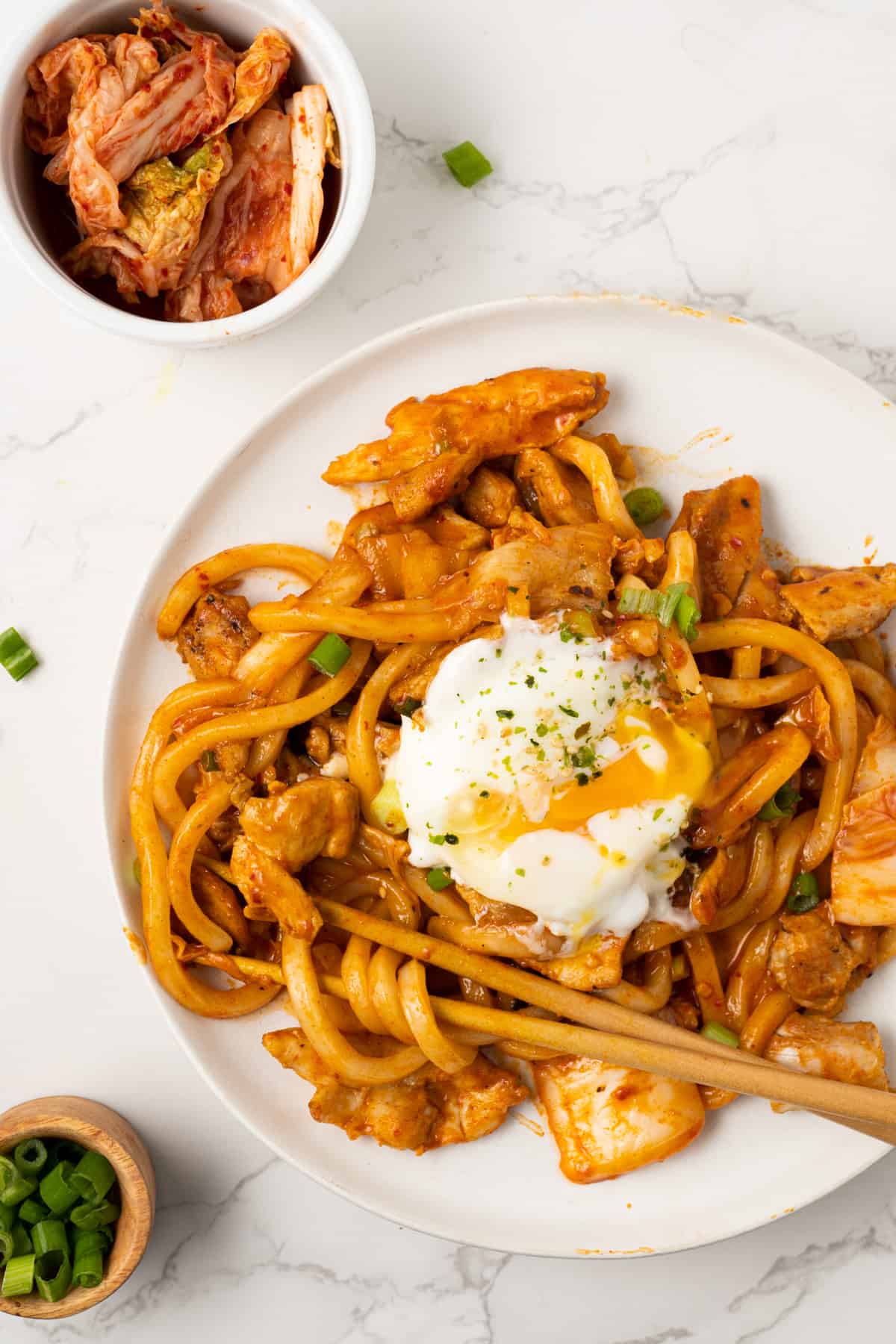
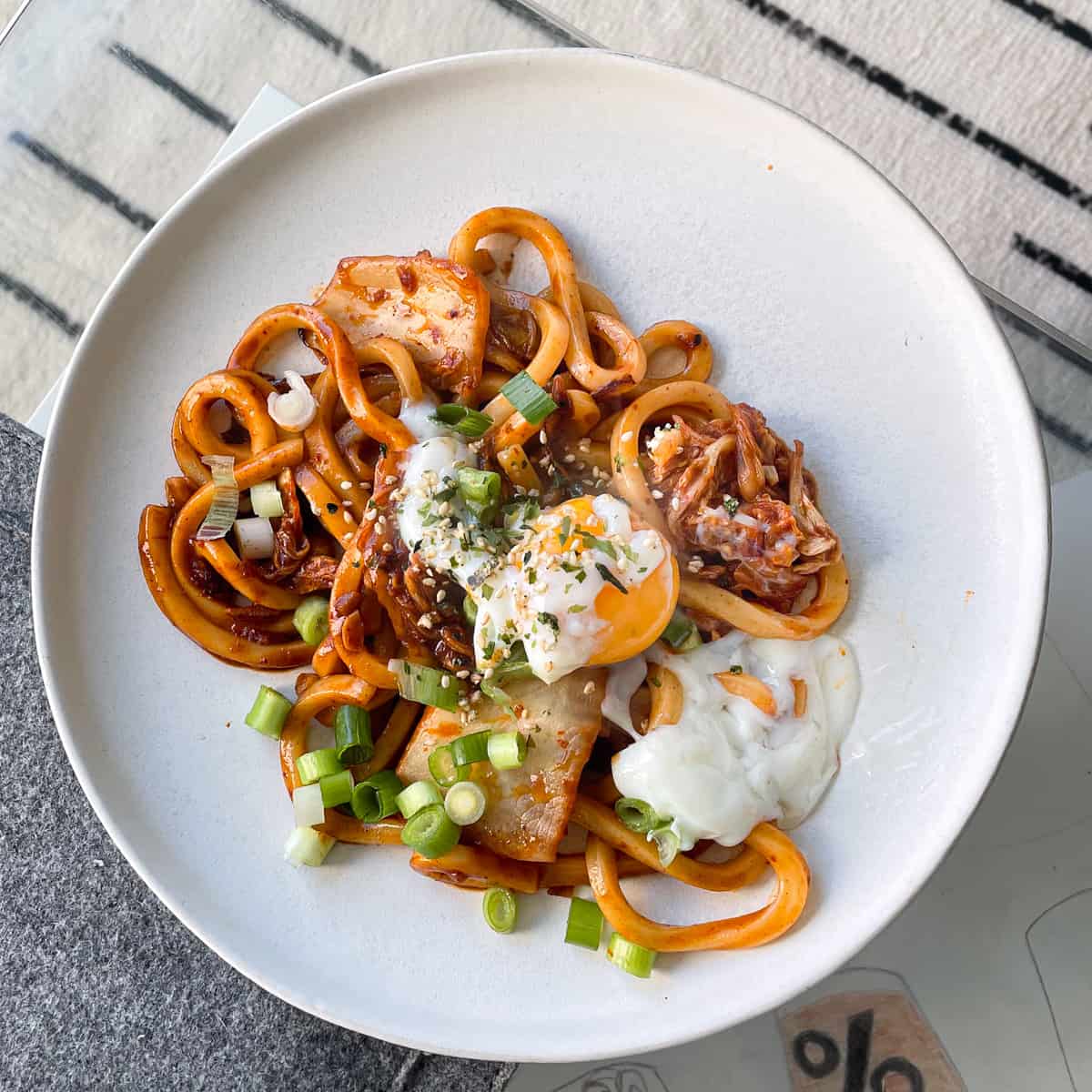
This umami kimchi udon recipe is such a delicious easy weekday lunch. The salty, delicious Kimchi flavor paired with the creamy texture of an egg coated on the chewy udon noodles makes a truly mouthwatering recipe.

💭 What is Kimchi Udon?
Kimchi udon is a Korean-Japanese fusion dish that combines thick, chewy udon noodles with spicy, fermented Korean kimchi. The result is a flavorful and comforting noodle dish that is both tangy and savory.
This dish is a great healthy Japanese recipe that is often found at izakayas, or Japanese tapas restaurants.
✅ Why This Recipe Works
Easy to make – No hours of prep needed. This dish will easily come together in under 30 minutes.
Delicious Medley of Flavors – The combo of sweet, tangy, and spicy flavors in the kimchi udon creates a perfect medley of flavors.
Low in calories and macro-optimized – This healthy udon recipe was specially developed by yours truly to be low-calorie and macro-friendly. Pair it with a side of chicken bulgogi for a delicious meal.
🍎 Calories and Nutrition – Is It Healthy
Kimchi udon is made with relatively healthy ingredients, so portion control is key here to make a macro-friendly dish. In this recipe, the kimchi udon came out to be 390 calories, 32 grams of protein, 16 grams of fat, and 43 grams of carbs.
Here's how I portioned it:
- Portion the noodles – I use only half a pack of udon so only about 150 calories come from the noodles
- Portion the sauce – The sauce only comes out to about 35 calories
- Bulked up with egg and chicken – These are great sources of lean protein to add to the dish
- Used cooking spray instead of oil – Traditional cooking oil has about 120 calories per tablespoon while cooking spray has almost none.
For a detailed breakdown of each ingredients, their portioning, and how they make up the nutrition profile of this kimchi udon recipe, you may refer to the table below:

📋 Ingredient Notes
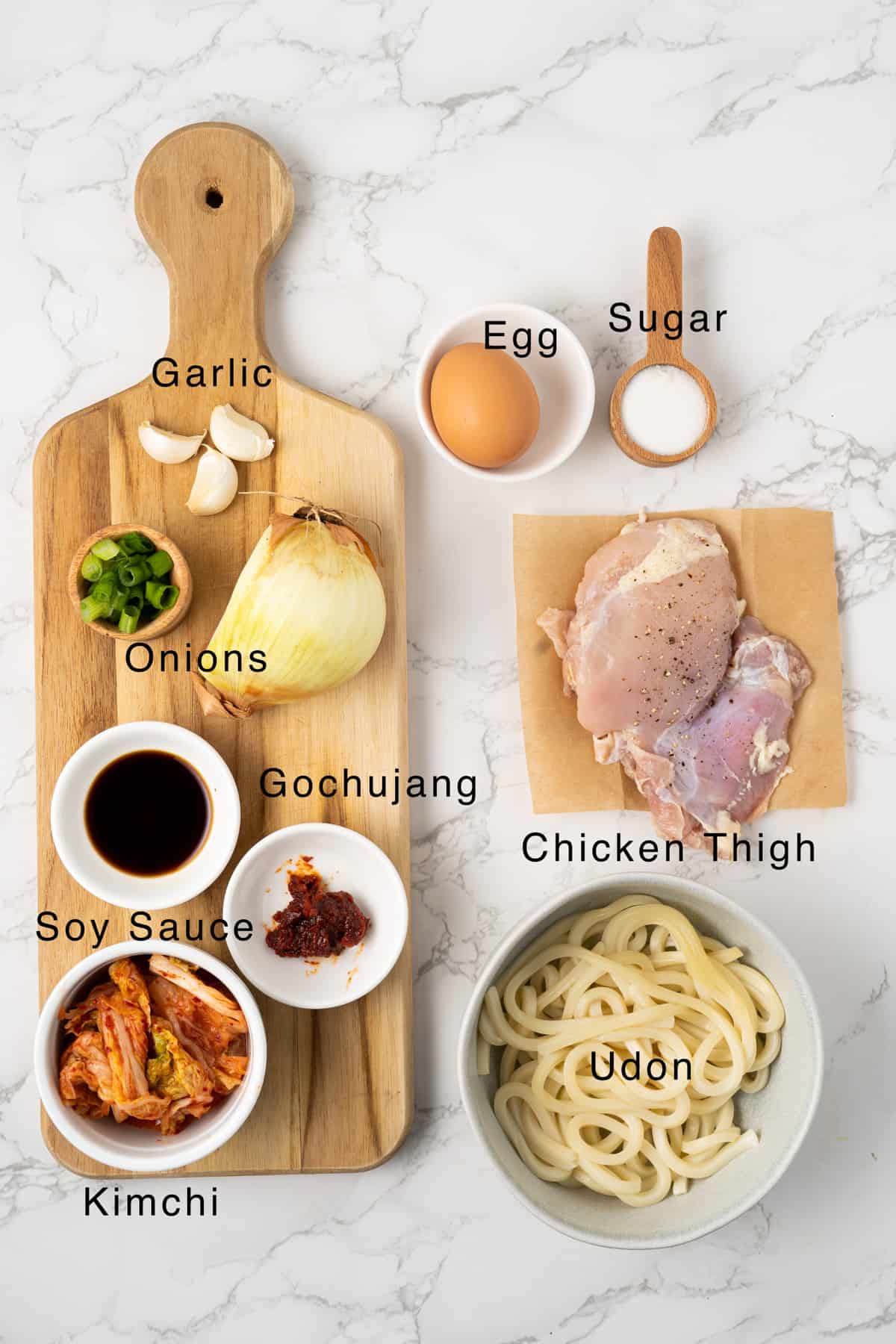
To make the kimchi udon, you'll need these key ingredients:
- Udon noodles – These are typical Japanese wheat-based noodles. You can find them at most Asian grocery stores. Try to opt for frozen ones over vacuum sealed ones as those are able to soak up flavor better.
- Kimchi – This is a popular Korean dish that consists of napa cabbage fermented with a variety of spices. You can buy this at most Asian grocery stores, or try making your own.
- Gochujang – This condiment is a Korean red pepper paste that gives the noodles a delicious sweet and spicy flavor and serves as the base for the sauce. It's a very popular condiment in Korean cooking.
- Egg – Adds a luscious creamy texture to the dish beautifully complements the bold and savory notes of the kimchi.
- Scallions – Adds a touch of freshness to the dish, a great contrast with the savory flavors of the dish
See my recipe card below for a complete list of the ingredients with measurements.
📖 Substitutions and Variations
Noodle Options – Egg noodles or flour/wheat based noodles would also work
For a spicier kick – For a spicier dish, add half a teaspoon of gochugaru, or red pepper flakes, into the dish
Make it creamy – Add a splash of milk into the sauce for a creamier texture
🔪 Step by Step Instructions
Poach the egg – Begin to make poached egg. I made mine using the sous vide method, cooking it at 75 Celsius for 13.5 minutes. See this article about sous-vide poached eggs for more info.
Cook the udon – In a different pot, cook half pack of Udon noodles, drain and set aside.
Cook the chicken – Cut the chicken into bite-sized pieces and season with salt and pepper. Heat a frying pan on medium-high heat, spray skillet with cooking spray, and add the chicken pieces in a single layer. Cook for about 3-4 minutes on each side.
Sauté the aromatics – Once the other side of the chicken is cooking, add in the garlic, onions, and kimchi. Cook for about 1-2 minutes, or until fragrant.
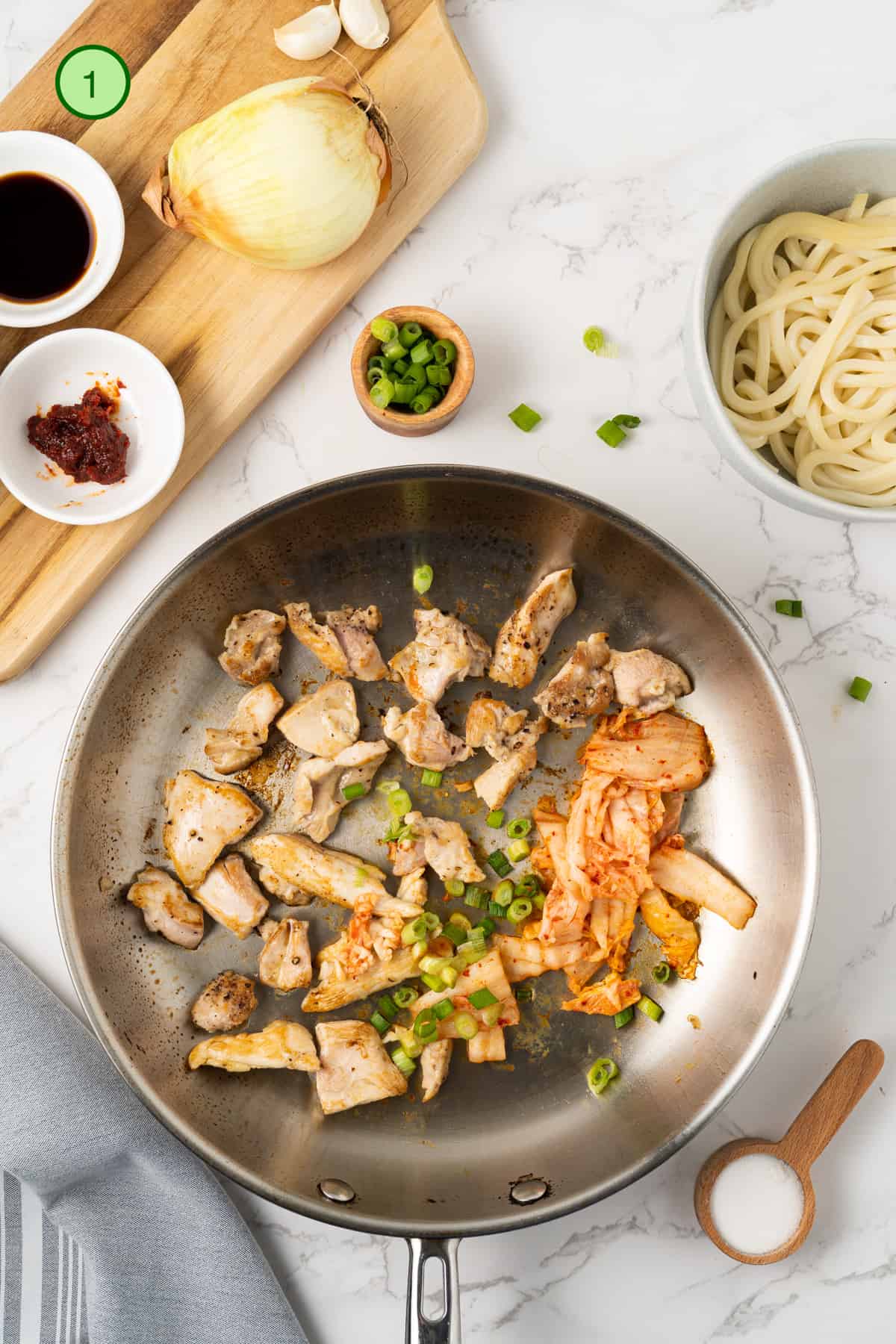
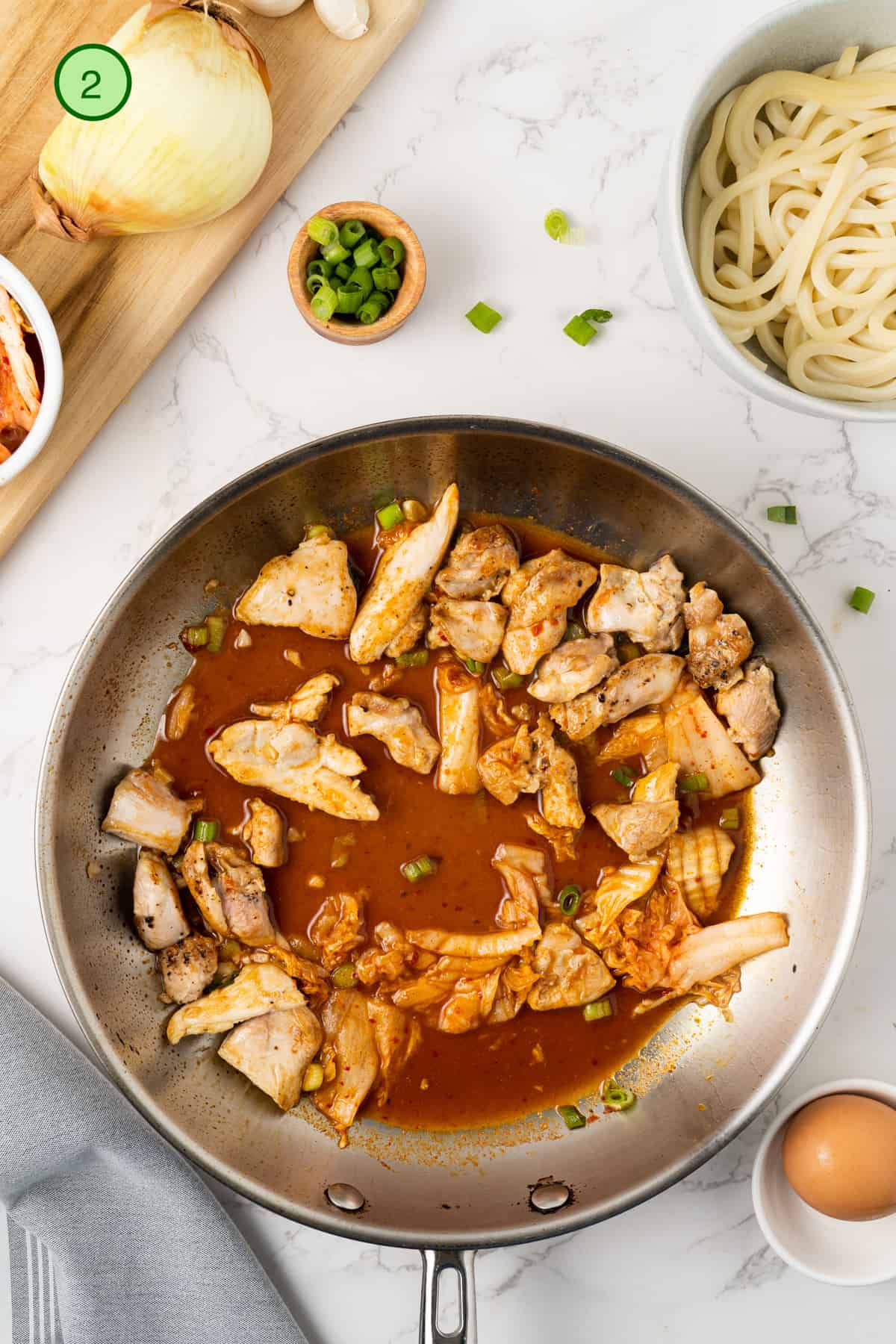
Make the sauce – Add the gochujang and stock to the pot and stir thoroughly.
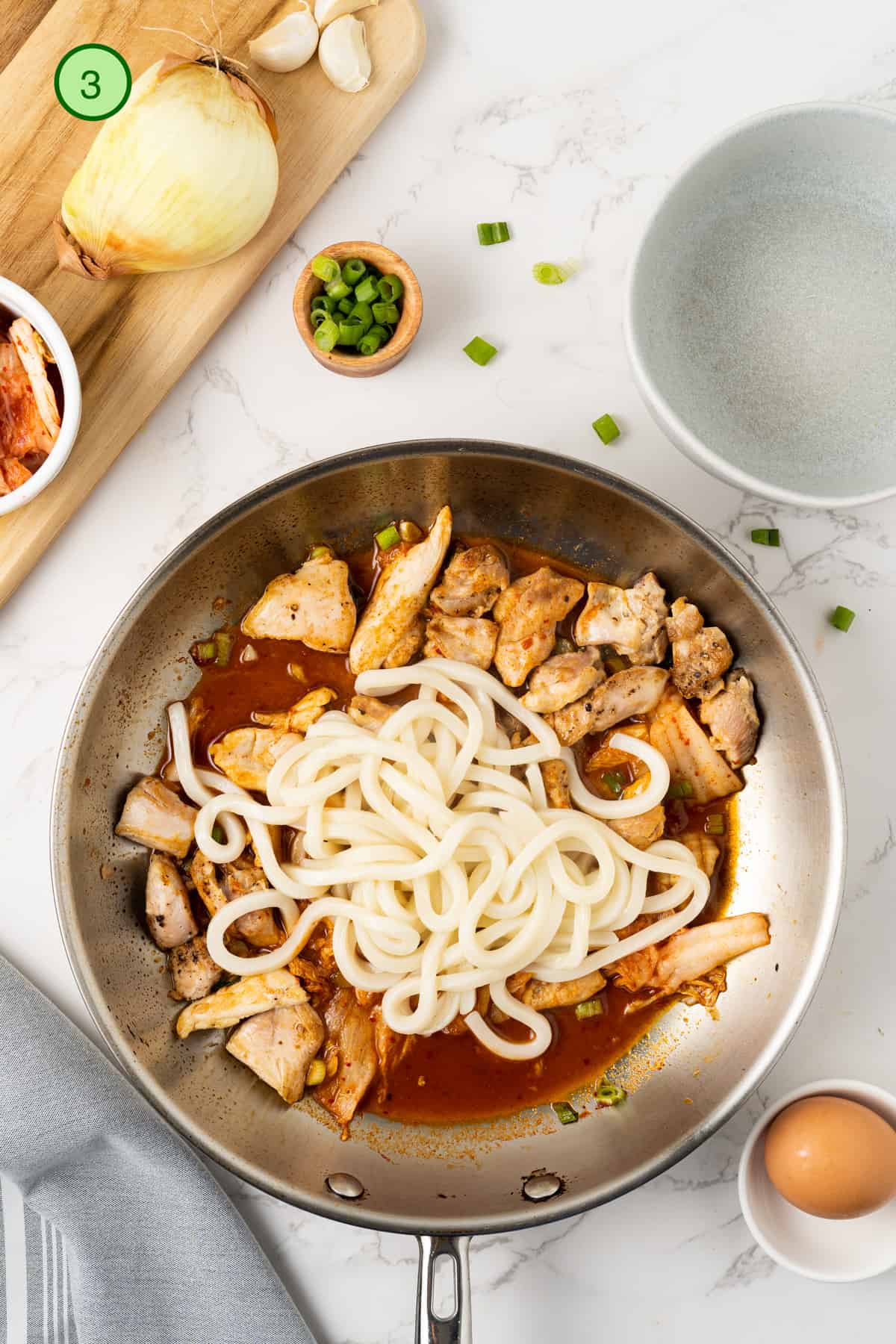
Toss in the noodles – Toss in Udon noodles and stir. Add in the kimchi juice at this time to help boost the flavor and deglaze the pan. If you don't have any kimchi juice, water works as well.
Garnish and serve – Top with poached eggs and scallions and enjoy your kimchi udon!
💭 Recipe FAQs
This recipe calls for a sous vide poached egg, which is my favorite way of making one given how foolproof it is. However, not everyone has a sous vide -- and that's okay because there are other ways of making this work. For those of you who have a sous vide, this article on how to make the Perfect Sous Vide Eggs will guide you in the right direction.
And for those of you don't who don't have a sous vide, this article will give step by step instructions on How to Poach Eggs Perfectly.
You can use any wheat based noodles or pasta, like bucatini, or any long spaghetti-like pasta for a similarly delicious meal.
Use aged kimchi for a more complex flavor. Any kimchi that is stored in the frige for more than 2 weeks
💡Expert Tips
To heighten flavor of kimchi – If kimchi not 2 weeks old yet, leave out at room temperature overnight to help heighten flavors. Given the kimchi is fermented already, it's safe to do so from a food safety perspective.
Opt for frozen udon vs vacuum – Frozen udon tends to be fresher so is able to soak of the flavors of the sauce better.
🍽 Related Recipes



Love this recipe? Please leave a 5-star 🌟🌟🌟🌟🌟rating in the recipe card below & if you REALLY like this recipe, consider a review further down the page. Thank you!
🍳 Recipe
Kimchi Udon
Ingredients
- ⅓ cup Kimchi (Chopped, plus some kimchi juice)
- 4 oz Chicken Thigh
- 1 tablespoon Gochujang
- ¼ cup Chicken Stock (Or water)
- 1 tablespoon Onions (Chopped)
- ½ pack Udon
- 1 clove Garlic
- 1 teaspoon Sugar
- 1 Egg (Poached - I used sous vide but there are other methods)
- 1 Scallion (For garnish)
Instructions
- Poach the egg – Begin to make poached egg. I made mine using the sous vide method, cooking it at 75 Celsius for 13.5 minutes. See this article about sous-vide poached eggs for more info.
- Cook the udon – In a different pot, cook half pack of Udon noodles, drain and set aside.
- Cook the chicken – Cut the chicken into bite-sized pieces and season with salt and pepper. Heat a frying pan on medium-high heat, spray skillet with cooking spray, and add the chicken pieces in a single layer. Cook for about 3-4 minutes on each side.
- Sauté the aromatics – Once the other side of the chicken is cooking, add in the garlic, onions, and kimchi. Cook for about 1-2 minutes, or until fragrant.
- Make the sauce – Add the gochujang and stock to the pot and stir thoroughly.
- Toss in the noodles – Toss in Udon noodles and stir. Add in the kimchi juice at this time to help boost the flavor and deglaze the pan. If you don't have any kimchi juice, water works as well.
- Garnish and serve – Top with poached eggs and scallions and enjoy your kimchi udon!
Cherie
So glad I found this recipe! Had this dish at a restaurant recently and was hoping to learn how to make it